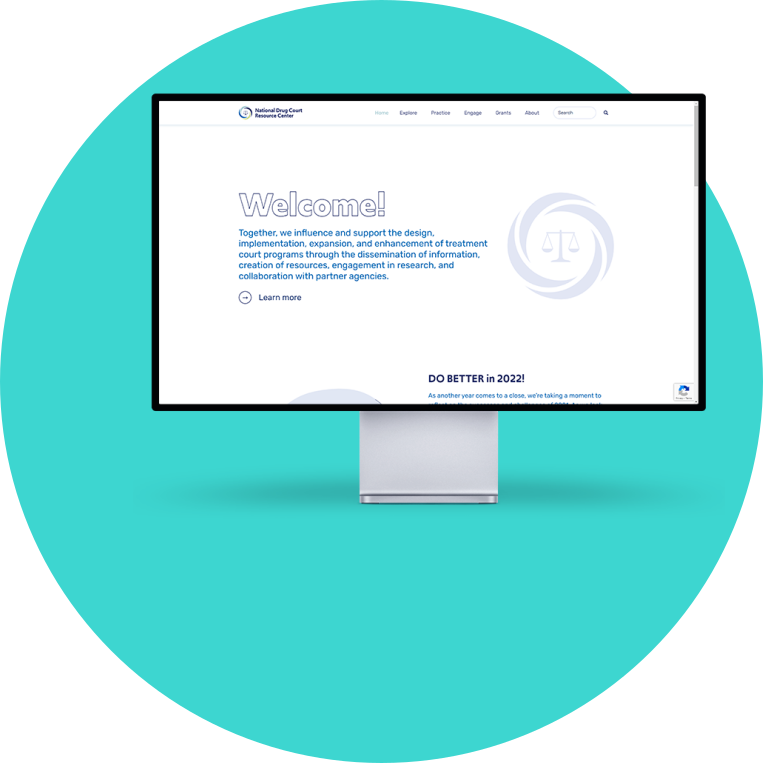
Website Redesign
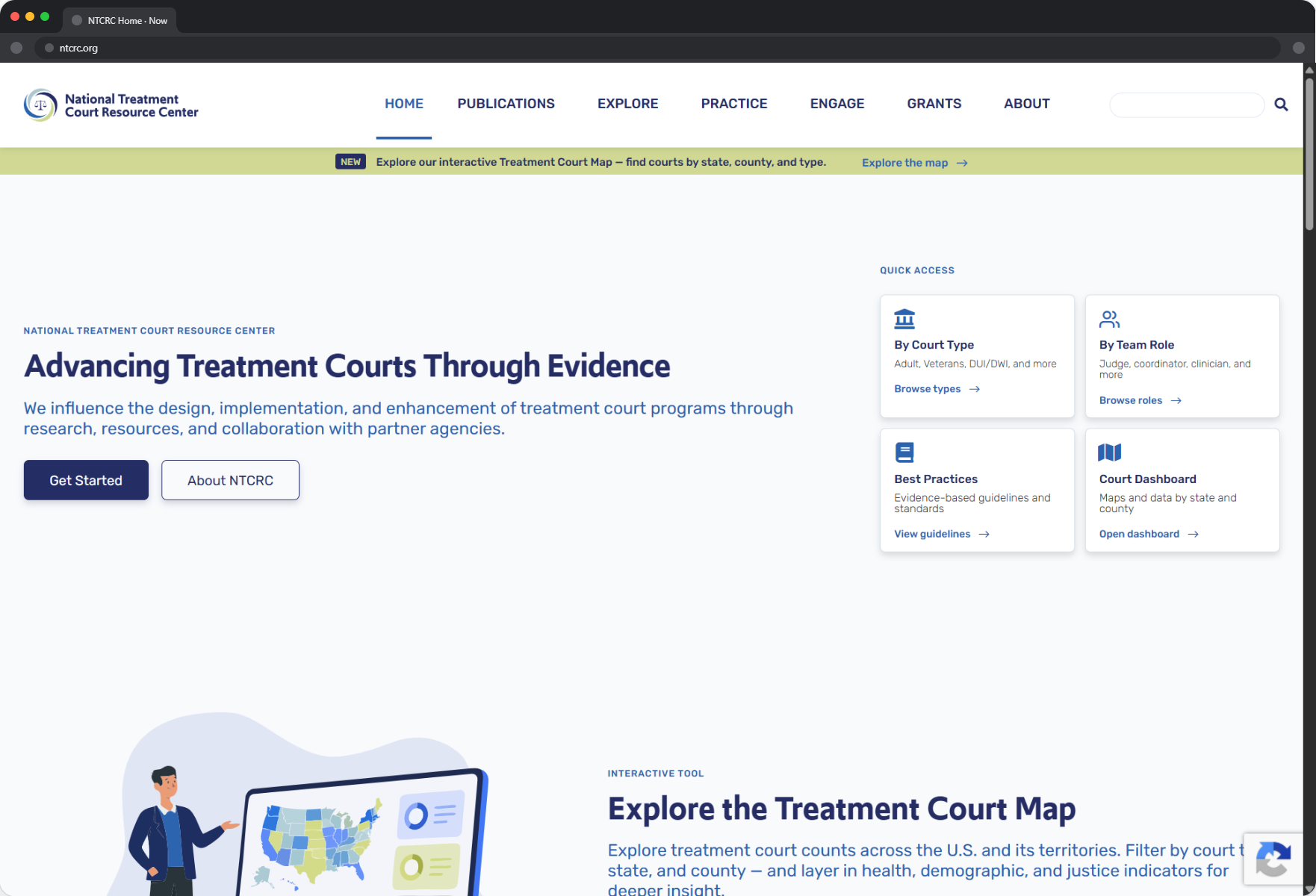
The NTCRC is the go-to digital resource for treatment court professionals across the country. Its website hadn't caught up.
tools
WordPress, WPEngine, Adobe Illustrator, Adobe XD, Google Analytics
project duration
4 weeks (initial)
2+ years (ongoing)
Visit ntcrc.org
The Opportunity
An Outdated Website for a National Organization
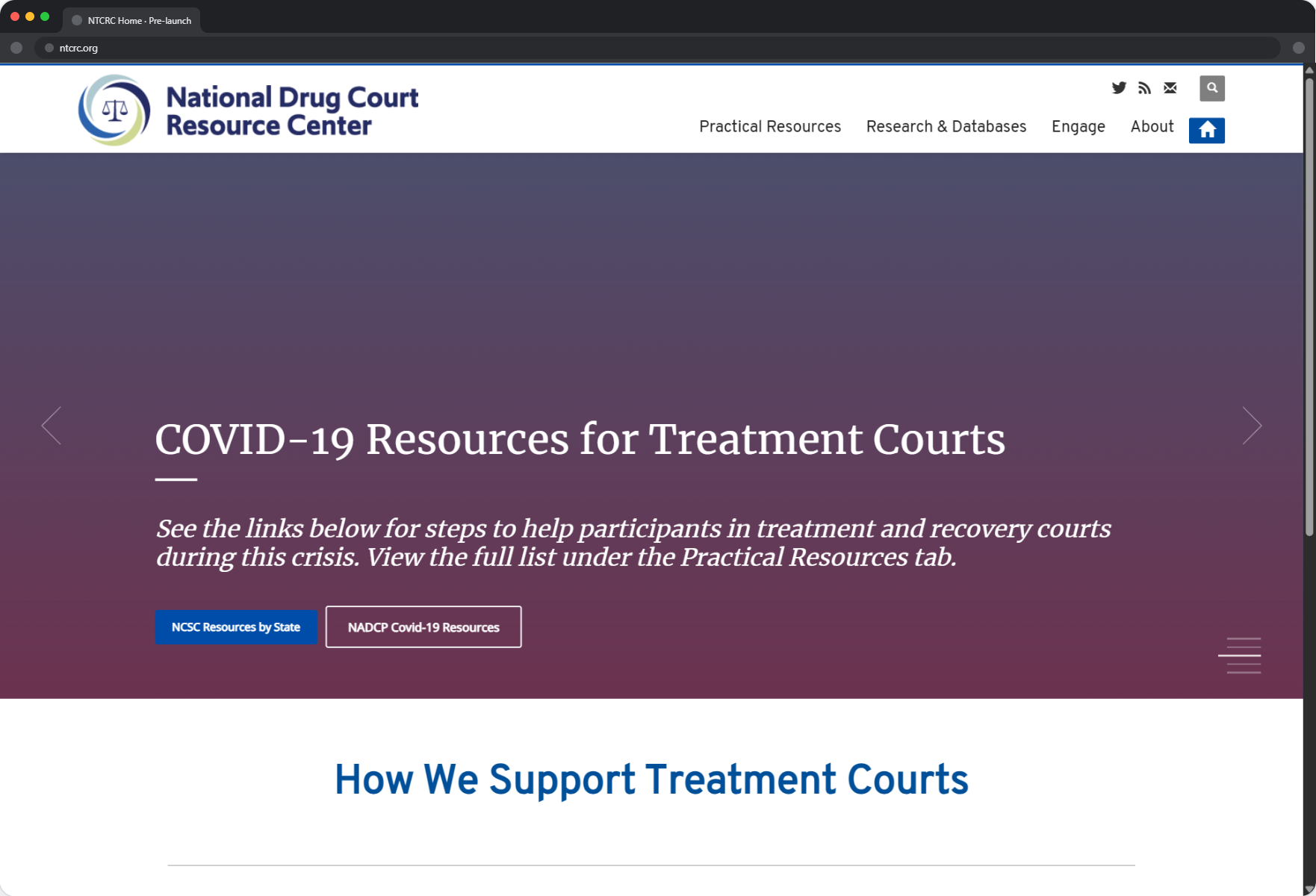
Unorganized page structure, limited visual hierarchy, and outdated resources had made the site a frustration for the treatment court professionals who needed it most. A full redesign, timed to launch at RISE20, was the clear path forward.
The Solution
A Clean Slate, Built to Last
Patching the existing site wasn't going to cut it. I proposed starting from scratch, building only what was essential for a clean launch at RISE20 and a foundation the organization could grow into.
The Process
Identify Pain Points
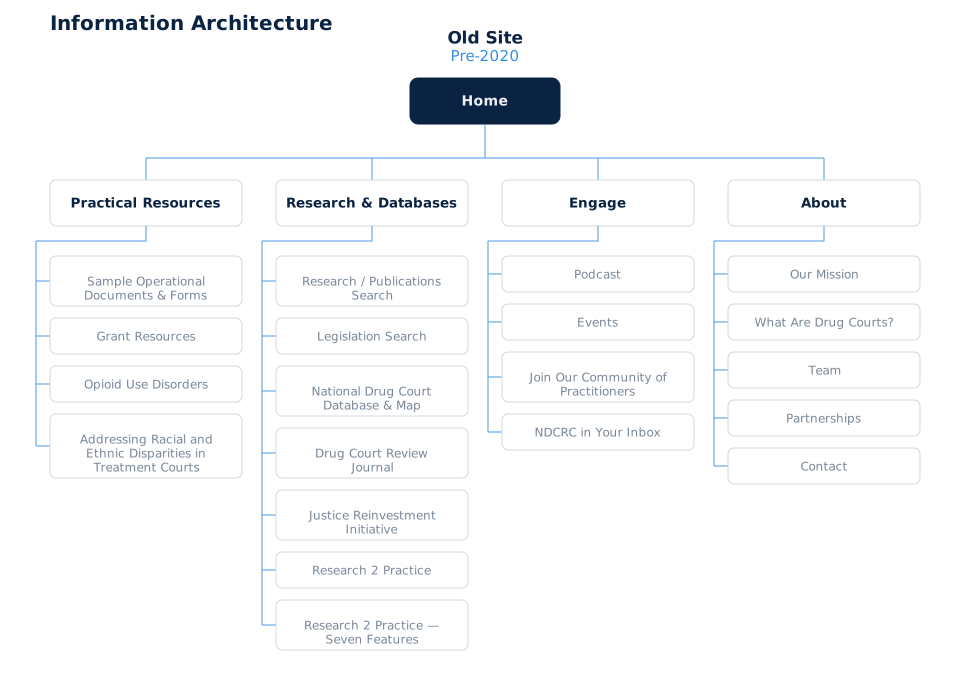
With only 4 weeks to launch, defining the requirements for a minimum viable product was the first priority. Discussions with treatment court stakeholders revealed that the site's information architecture and inconsistent page layouts were the primary pain points.
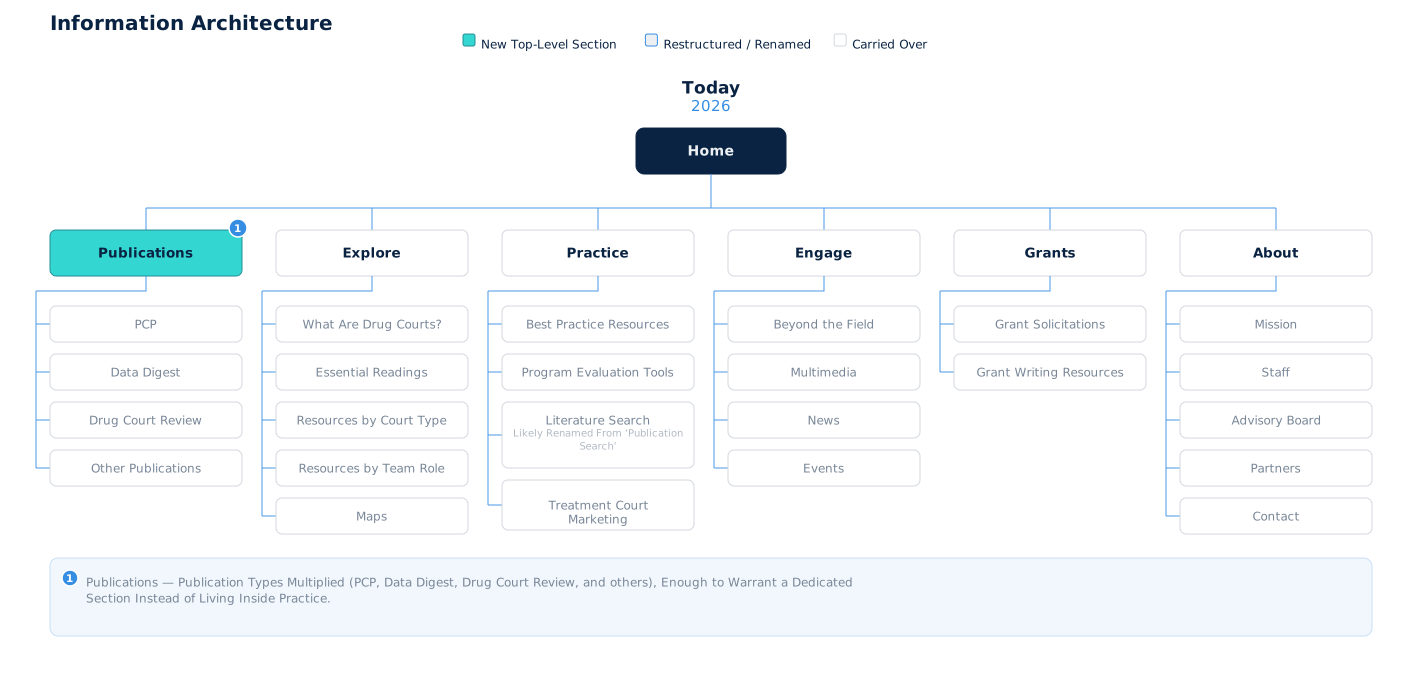
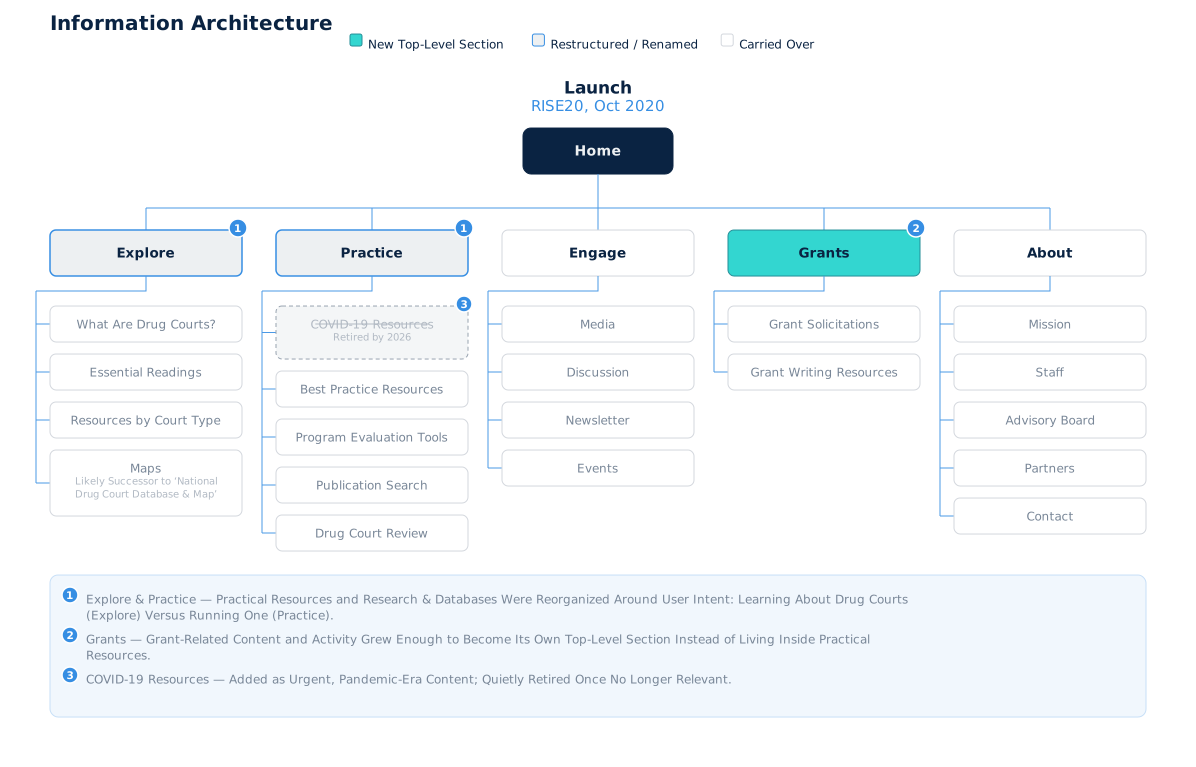
To address the IA concerns, I scheduled a mixed card sorting session with the NTCRC co-directors — subject matter experts who served as the closest available proxy for our primary users. I created cards from the existing site content and asked the co-directors to first set aside anything they felt was low priority, then group the remaining cards by relation, and finally label each group with a single word. The result defined the entire navigation structure: Explore, Practice, Engage, Grants, and About.
Create Foundation for Design System
The website redesign ran simultaneously with the rebranding of the Center. Being in charge of both was a deliberate advantage, eliminating the risk of inconsistencies between the two workstreams and giving me a clearer picture of how all the elements would come together.
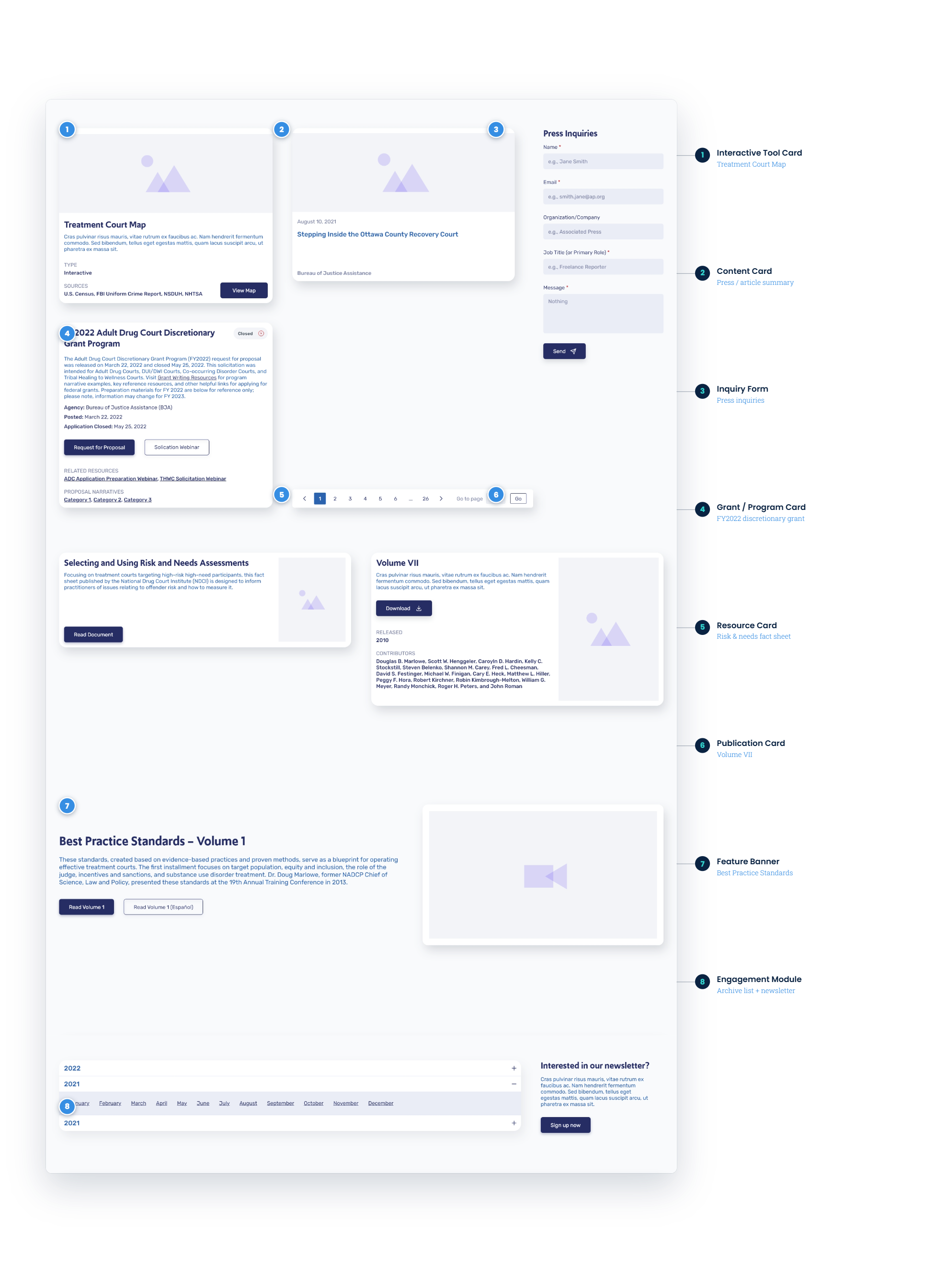
Before building out any pages, I established a design system foundation to ensure consistency across the site. This included typography, color, buttons, section layouts, illustrations, and other reusable components such as cards. Having these elements defined upfront made the build phase significantly more efficient and gave the site a cohesive visual language from the start.
Build New Site Structure
With the navigation and page layout approved by the full staff team, I moved forward with the build. WordPress and Elementor Pro were selected after considering who would need ongoing access to the site. The volume of resources the Center houses meant subject matter experts needed the ability to keep content current, accurate, and free of duplicates in their respective areas. A calendar of treatment court events also required regular maintenance. WordPress and Elementor Pro satisfied both needs while allowing for a much faster build than a custom-coded solution.
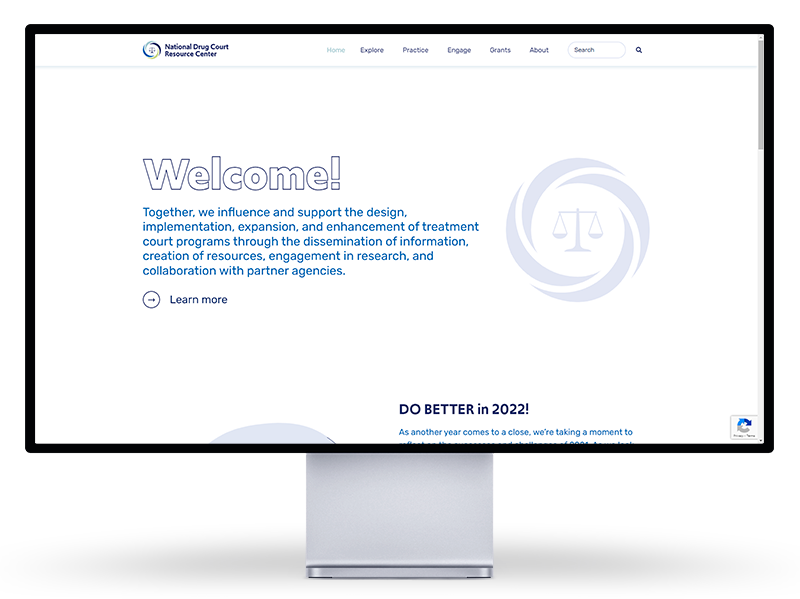
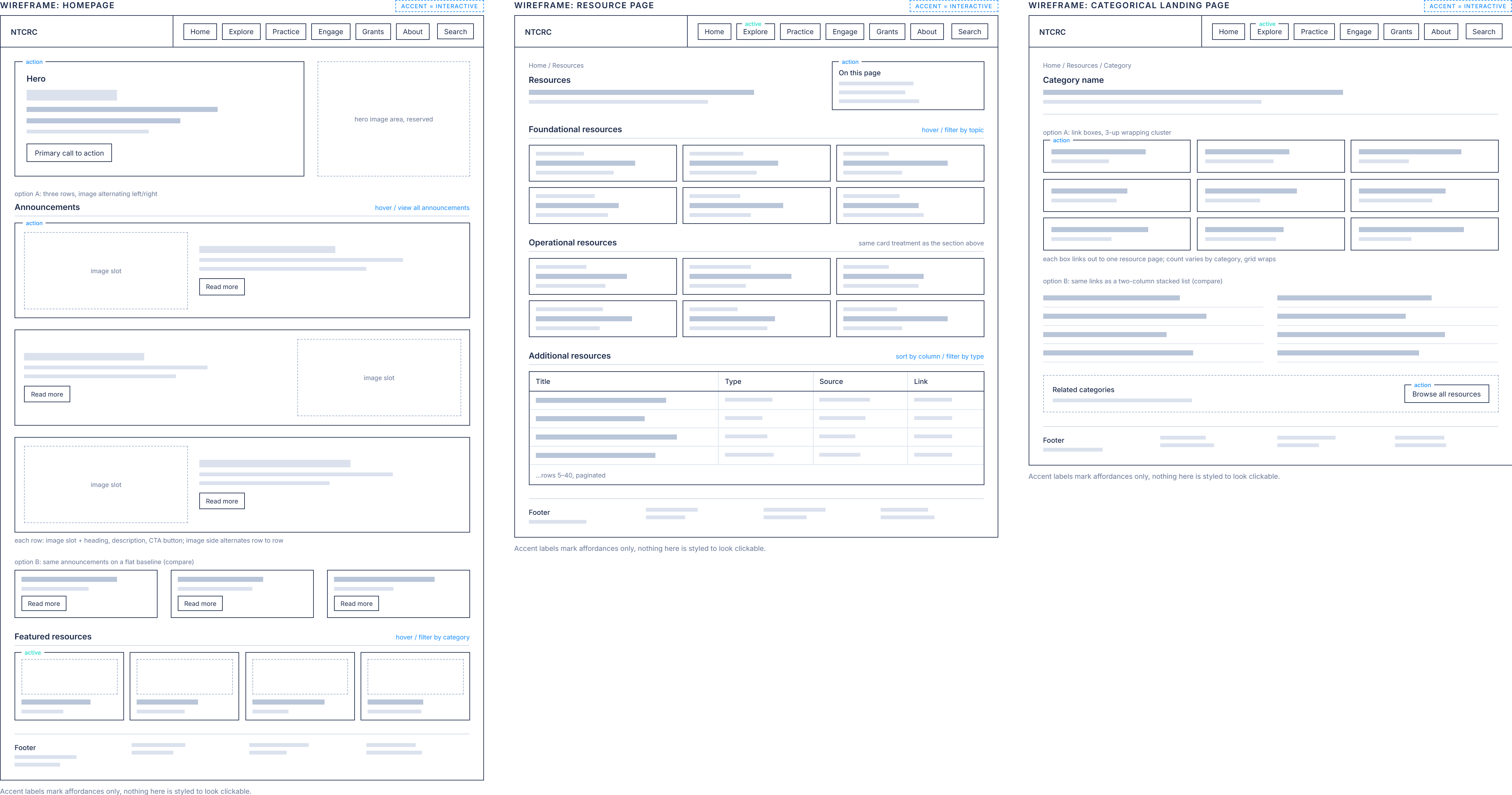
Three primary page structures emerged from the build. The homepage consists of staggered announcement groups with clear calls to action. Resource pages are organized into foundational resources, operational resources, and a table of additional resources. Categorical landing pages serve as hubs, grouping related resource pages together.
Launch and Evolve
With content migrated from the previous site and adjustments made to fit the new experience, I fine-tuned the visual hierarchy, integrated iconography, and validated color balance before a thorough round of functional testing. The site launched at RISE20, though the impact of an in-person conference debut was tempered by the onset of COVID-19.
What followed was 5+ years of continuous improvement. The design system grew and matured alongside the site, with regular content updates ensuring resources stayed current and relevant. The real validation came at subsequent conferences, where treatment court professionals consistently noted that finding information for their specific court type or team role was significantly easier than before. That feedback, more than any single metric, confirmed that the restructured information architecture had hit the mark.